
The first few seconds
Cold plunging has exploded in popularity. Professional athletes use it. Runners swear by it. Social media is full of people climbing into ice baths at 6am and looking suspiciously pleased with themselves.
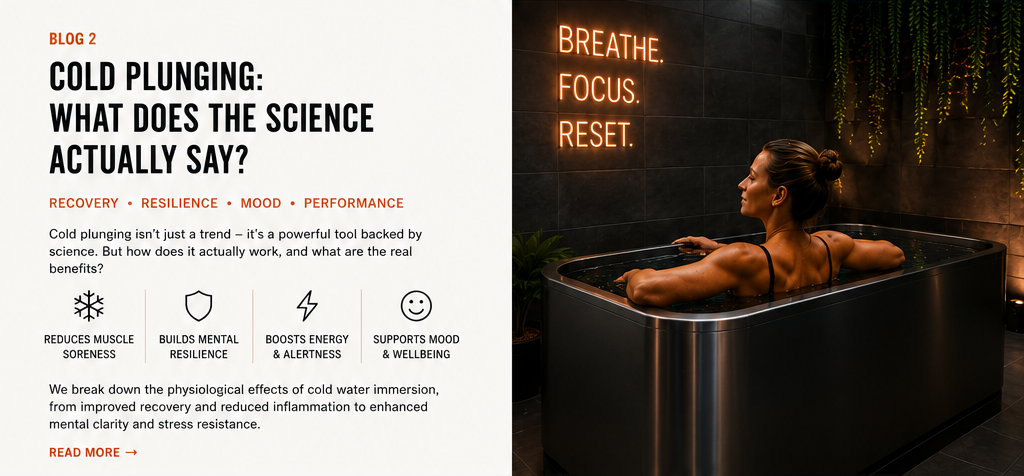
Strip away the hype and there is a genuinely interesting physiological response happening when you enter cold water. Your body detects the sudden drop in temperature and responds. Blood vessels near your skin constrict. Your heart rate and blood pressure can increase and your breathing may become faster.
This initial cold-shock response is why you should not simply jump into extremely cold water without understanding what to expect. At Sauna & Soul, the aim is not to see who can suffer for longest. The challenge is learning to become calm while your body is experiencing stress.
Breathe
Your instinct might initially be: GET OUT.
Instead, concentrate on your breathing. Slow it down. Relax your shoulders. Do not fight the sensation. After that initial shock, many people find their breathing begins to settle and the experience becomes much more manageable.
That moment – when something initially uncomfortable suddenly feels controllable – is one of the reasons people become hooked on cold plunging.
What about muscle recovery?
This is where cold-water immersion has probably received the most scientific attention. It has been studied extensively in relation to exercise recovery, particularly following strenuous training and competition.
Research suggests cold-water immersion can help reduce perceived muscle soreness after demanding exercise. That helps explain why cold baths have become common across professional sport.
Is cold always good after training?
Not necessarily. If your primary objective is building as much muscle as possible, routinely jumping into very cold water immediately after every resistance-training session may not be ideal. Some research suggests repeated immediate post-strength-training cold immersion could interfere with aspects of the adaptation you are trying to stimulate.
That is different from saying cold plunging is bad. It simply demonstrates something important about recovery: context matters. If you have played several padel matches, completed a hard run or simply feel battered after a demanding week, your objectives may be very different from those of a bodybuilder trying to maximise hypertrophy.
Why do people feel so good afterwards?
Get out of a cold plunge and there is often an unmistakable feeling of: I am awake now.
Your nervous system has just experienced a significant stimulus. Research into the effects of cold exposure on mood, stress and neurotransmitters is developing, and we would be cautious about some of the extraordinary claims made online. A cold plunge is not a miracle treatment.
But the immediate subjective effect can be powerful: alert, energised, focused – and usually rather pleased that you managed to stay in.
How cold and how long?
You do not need a tub filled with ice cubes, and colder is not automatically better. The appropriate temperature depends partly on experience and how long you are staying in.
The objective should be a controlled exposure to cold, not an endurance contest. Likewise, you do not need to chase someone else’s time. Thirty seconds might initially feel substantial. Over time, you might become comfortable staying longer.
Cold water places genuine stress on the cardiovascular system. People with cardiovascular conditions, uncontrolled high blood pressure or other relevant health concerns should seek appropriate medical advice before cold-water immersion. Never push through chest pain, severe dizziness or feeling seriously unwell.
The plunge is not punishment. Walk over. Get in. Breathe. Let the initial shock pass. Get comfortable with being uncomfortable. Then climb out.